Search
 The Employer Handbook Blog
Can employers compel arbitration in sex discrimination cases, or is there a loophole?


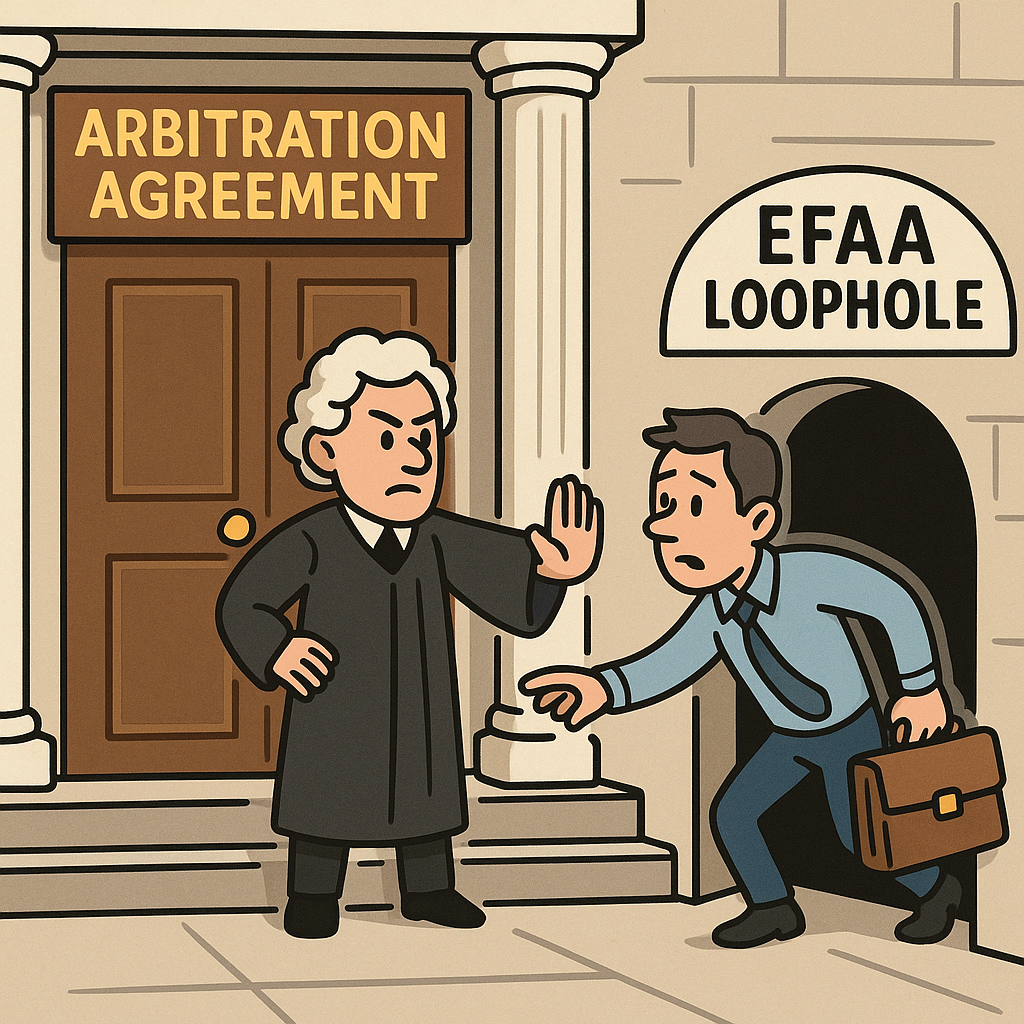
In 2022, Congress passed a law that makes it harder for employers to require arbitration in certain workplace cases. Some employees are now trying to use that law to keep sex discrimination lawsuits in court. A recent case in Connecticut shows the limits of that strategy: not every sex discrimination claim counts as sexual harassment, and only sexual harassment (or sexual assault) cases are exempt from arbitration.
TL;DR: The Ending Forced Arbitration of Sexual Assault and Sexual Harassment Act (EFAA) makes pre-dispute arbitration agreements unenforceable in cases involving sexual assault or sexual harassment. A Connecticut court held that the statute does not apply to ordinary sex discrimination or gender-bias claims. The employee alleged favoritism and hostility based on sex, but no conduct “of a sexual nature.” As a result, the court enforced the arbitration agreement.
📄⚖️Read the decision
What is the EFAA?
Congress passed the Ending Forced Arbitration of Sexual Assault and Sexual Harassment Act (EFAA) in 2022. It amended the Federal Arbitration Act (FAA) to give employees (and others) the option to take sexual harassment or assault claims to court, even if they signed an arbitration agreement before any dispute arose.
But the exception is narrow. The EFAA only applies if the plaintiff plausibly alleges sexual harassment or sexual assault as defined by law. Other types of bias or hostile work environment claims remain subject to arbitration agreements.
Why the employee went to court
A former vice president sued for sex discrimination, retaliation, and hostile work environment under Title VII of the Civil Rights Act of 1964 (Title VII) and the Connecticut Fair Employment Practices Act (CFEPA), along with related tort and contract claims. He also asked the court to declare his case exempt from arbitration under the EFAA.
His allegations included:
- hostility from his supervisor, expressed through tone, facial expressions, and body language,
- favoritism toward female employees, and
- retaliation after he complained.
He did not allege unwelcome sexual advances, requests for favors, or other sexual conduct.
Why the EFAA did not apply in this case
- Arbitration agreement valid: The employee signed a broad arbitration agreement that clearly covered discrimination claims.
- EFAA did not apply: The allegations described sex-based bias but no conduct “of a sexual nature.” That meant they were discrimination claims, not “sexual harassment disputes” under the EFAA.
- Hostile work environment theory failed too: Separately, the court held the alleged conduct was not severe or pervasive enough to create a legally actionable hostile work environment under Title VII.
Result: The case was compelled to arbitration and stayed in court.
Practical lessons for employers
- Arbitration agreements remain enforceable against most discrimination claims, including sex discrimination, unless the facts involve actual sexual harassment or assault.
- EFAA has a narrow scope. The carve-out applies only where the allegations include sexual advances, requests, or other conduct of a sexual nature. General bias or favoritism toward one gender does not qualify.
- Be ready for challenges. Employees may try to frame bias claims as “harassment” or tack on thin harassment allegations to trigger the EFAA and avoid arbitration. Courts are applying a plausibility standard, which means only well-pled sexual harassment claims with conduct of a sexual nature will survive.
- Review and update arbitration agreements regularly. Make sure they are broad, clear, and compliant with the EFAA.
- Investigate complaints thoroughly. Even when arbitration applies, employers should address complaints of bias or harassment quickly and document responses. A strong record is critical in any forum.
Bottom line
The EFAA blocks arbitration for sexual harassment or assault claims, but ordinary sex discrimination claims still belong in arbitration if agreements are clear and well-drafted.