Search
 The Employer Handbook Blog
When Pro-American Bias Violates Title VII: The EEOC’s New National Origin Materials Cut Both Ways


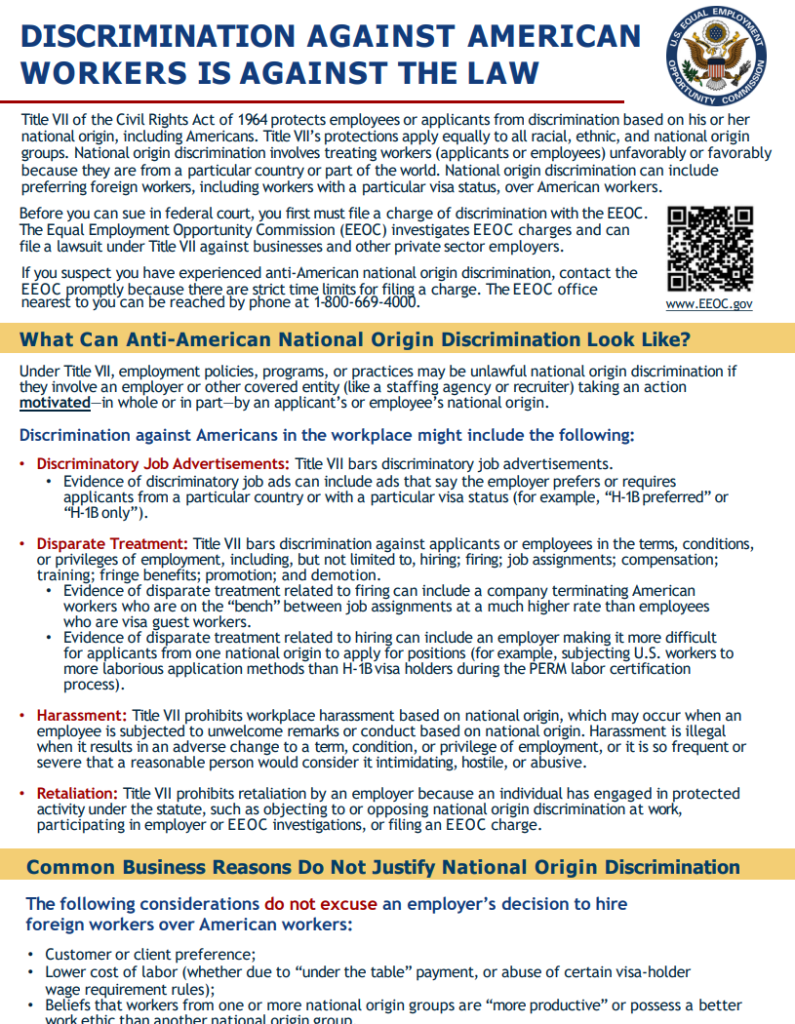
The EEOC just refreshed its national origin educational materials. They focus on anti-American discrimination. But turn the examples around and you see an equally important point: pro-American favoritism can violate Title VII too.
TL;DR: Title VII protects all national origin groups. The EEOC’s new guidance spotlights discrimination against Americans, but the same rules apply when employers disadvantage workers because they are not American.
Title VII’s Symmetry: Bias Works Both Ways
The guidance emphasizes that employers cannot prefer foreign workers because of national origin. Turn it around, and the same principle applies when employers prefer American-born workers for reasons tied to national origin. Title VII bars decisions motivated in whole or part by where someone is from, not just discrimination in one direction.
Below are the EEOC’s core concepts, flipped to show how pro-American bias can create the same legal problems.
How Pro-American Favoritism Can Create Title VII Risk
1. Job ads signaling “Americans only”
The guidance warns against ads that reflect a national origin preference, like if an employer prefers or requires applicants from a particular country or with a particular visa status (for example, “H-1B preferred” or “H-1B only”).
Flip it: Ads implying only American-born candidates are wanted, or discouraging foreign-born applicants, raise the same concerns. Terms like “American-born preferred,” “locals only,” or unnecessary citizenship requirements can function as national origin screens.
2. Favoring Americans in hiring or firing
The EEOC identifies disparate treatment when Americans are disadvantaged, like if a company terminates American workers who are on the “bench” between job assignments at a much higher rate than employees who are visa guest workers.
Flip it: If a company routinely hires lesser-qualified Americans over qualified foreign-born candidates, national origin may be driving decisions. That is the same Title VII issue, just reversed.
3. Harassing workers for not being American
The guidance explains that harassment based on national origin is illegal when severe or frequent.
Flip it: Jokes or comments about loyalty, accents, or “not being American enough” can create a hostile work environment for foreign-born employees.
4. Retaliating when workers complain
Retaliation rules apply regardless of the direction of the bias.
Flip it: If a foreign-born employee objects to pro-American favoritism and then faces discipline or exclusion, retaliation concerns follow.
5. Business reasons do not excuse favoritism
The EEOC makes clear that common rationalizations cannot justify anti-American bias.
Flip it: Customer preference for Americans, stereotypes about work ethic, or assumptions about “cultural fit” do not excuse employment decisions based on national origin.
Three Takeaways For Employers
• Watch job ad language
Avoid terms that suggest a national origin preference. Focus on skills, not birthplace.
• Evaluate hiring and promotion patterns
Regularly review whether certain national origin groups are disproportionately favored.
• Train managers on bias in all directions
Preferences for “Americans” can be just as risky as preferences for any other group.
Conclusion
The EEOC’s new materials underscore that Title VII is neutral and symmetrical. Whether an employer disfavors Americans or shows preference for them, national origin cannot influence employment decisions. Now is a good time to review your processes and remove any hint that birthplace or heritage matters more than qualifications.