Search
 The Employer Handbook Blog
The No Robot Bosses Act: Why Employers Should Pay Attention Before the Algorithms Start Making Decisions for You


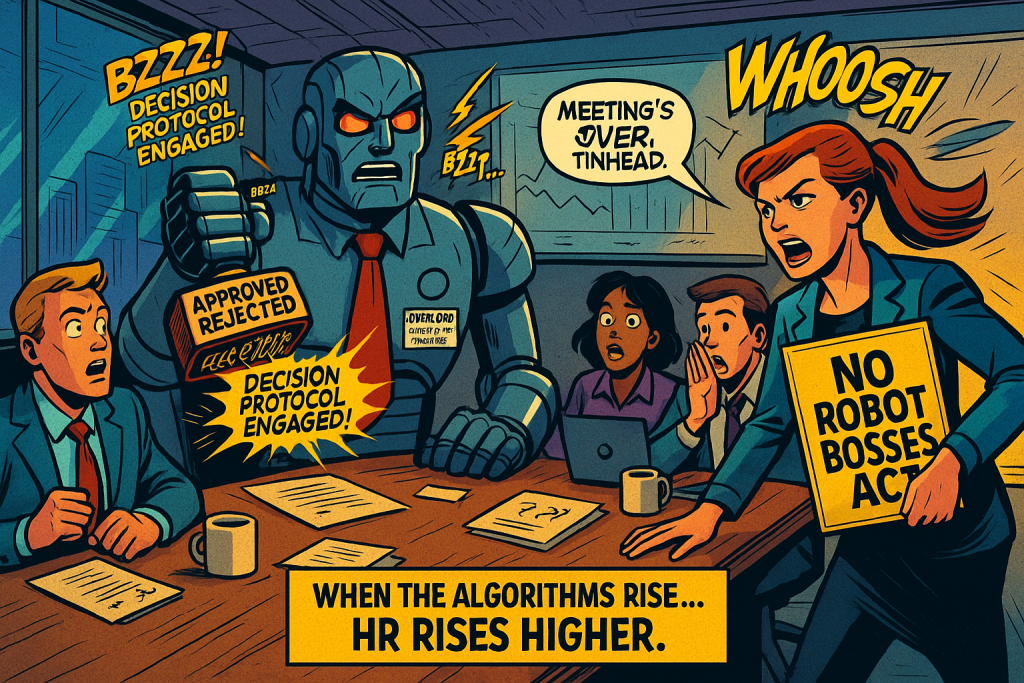
Congress is not slowing down on AI regulation. Weeks after lawmakers introduced a bill requiring employers to track how many jobs AI creates and eliminates, another proposal has arrived that targets how employers actually use AI at work.
TL;DR: The No Robot Bosses Act would create sweeping new federal rules for how employers use AI in employment decisions, including bans on exclusive reliance on automated tools, mandatory bias testing, annual audit disclosures, and a right for employees to appeal AI-assisted decisions to a human reviewer.
📄 Read the summary
📄 Read the full bill text
📄 Read the press release
Congress is pushing multiple AI bills at once
Earlier this month, I wrote about a related proposal that would require employers to report how many jobs AI is creating, eliminating, or reshaping. You can read that analysis here. That bill focuses on workforce transparency. The No Robot Bosses Act goes further by establishing guardrails for how employers deploy automated tools in hiring, management, and discipline. Together, the proposals preview a federal framework for AI in the workplace.
What the No Robot Bosses Act would require
At its core, the bill bars employers from relying solely on automated decision systems to make employment-related decisions. A human still has to be involved, and not just as a rubber stamp. Before an employer may use an algorithm’s output to influence a decision, a qualified person must review and confirm the result.
The bill also requires pre-deployment testing of automated systems to identify discrimination risks or other bias. That testing must continue over time through periodic evaluations to ensure the tools operate fairly and effectively.
And employers cannot simply purchase a tool and let it run. The bill requires training for anyone who uses or depends on these systems, including their limitations and risks.
Mandatory transparency for applicants and employees
Employers would have to provide timely disclosures explaining when they use automated tools, what information the system collects, what it measures, and how the employer intends to use the resulting output. Workers would also be informed of their rights, including the ability to challenge an automated output and request human review.
A worker opt-out for algorithmic management
If an employer uses AI to manage employees, for example scheduling, productivity monitoring, or workflow assignments, the bill would require offering a human-managed alternative. Workers would not be forced to accept algorithmic oversight for day-to-day management.
Enforcement with real penalties
The bill also creates a Technology and Worker Protection Division within the Department of Labor to regulate automated decision systems in the workplace and enforce compliance. It authorizes private lawsuits with treble damages, penalties up to 40,000 dollars for willful misuse of AI, penalties up to 100,000 dollars for retaliation, and temporary whistleblower reinstatement.
What employers should be doing now
Audit your AI tools
Inventory the systems used in hiring, evaluation, monitoring, and scheduling. Many employers have more AI running quietly in the background than they realize.
Build human review into every step
Even under current law, relying solely on automated output is risky. A qualified human should review any AI generated recommendation before taking action and be prepared to explain how it influenced the decision.
Prepare for transparency
Most employers cannot yet explain how their vendors’ systems work. The No Robot Bosses Act assumes you can. Now is the time to gather documentation, understand inputs and outputs, and train staff who use or rely on these systems.
The bottom line
Between the workforce-reporting bill and the No Robot Bosses Act, Congress is sending a clear message. Federal expectations around AI transparency, fairness, and human oversight are rising. Employers that act now will reduce legal risk and avoid a scramble if federal rules materialize.