Search
 The Employer Handbook Blog

A Transgender Employee Says the EEOC’s LGBTQ+ Rollbacks Drove Him Out. When Does Policy Become Harassment?


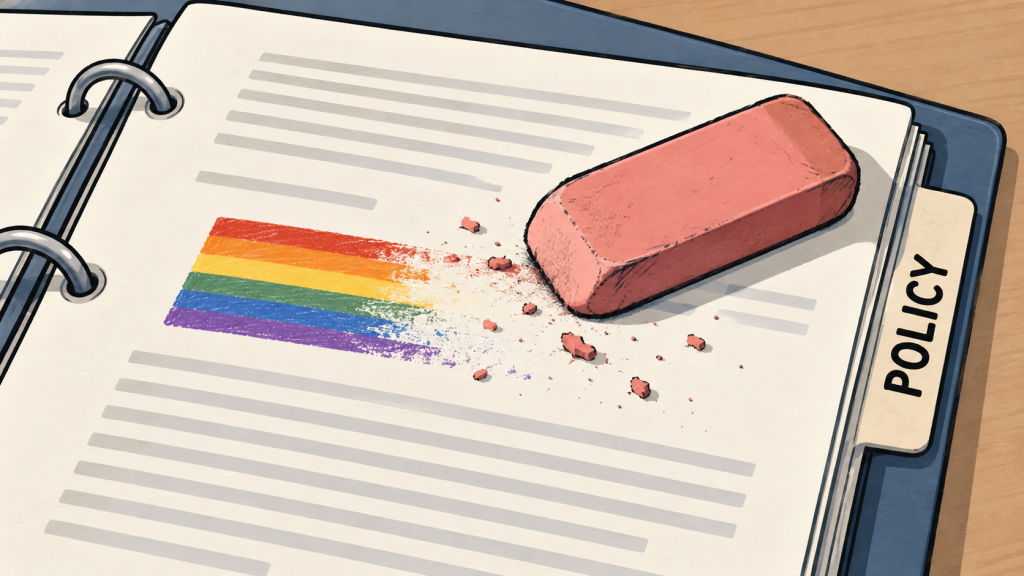
A former EEOC employee says the agency’s LGBTQ+ rollbacks made his job intolerable, including changes he was required to help implement. A federal court has allowed his harassment, discrimination, and retaliation claims to proceed.
TL;DR: A former transgender EEOC employee can pursue harassment, discrimination, and retaliation claims tied to LGBTQ+ policy changes and alleged sidelining. The court rejected the argument that policy directives and administrative decisions categorically fall outside a workplace harassment claim.
He helped build workplace support that he says disappeared
The employee, a transgender man in a senior information-governance role at the EEOC, helped lead its LGBTQ+ employee group and developed its pronoun-display application. He alleged that both were dismantled as the agency changed direction.
The changes followed President Trump’s January 2025 executive order directing federal agencies to recognize two sexes and remove materials promoting what the order called “gender ideology.” According to the complaint, the EEOC withdrew from litigation on behalf of transgender employees and directed staff not to process gender-identity discrimination charges.
He also alleged that leadership rescinded an internal nondiscrimination policy addressing gender identity and sexual orientation. He cited leadership’s public statement that repeatedly using pronouns consistent with biological sex was not harassment.
The employee alleged that he had to help remove LGBTQ+ references from agency materials while being excluded from decisions involving gender-identity terminology within his responsibilities. He claimed the changes caused distress requiring extended leave.
On March 4, he reported discrimination internally. According to his allegations, he was told the next day that he had “fallen out of favor,” and on March 6 learned he had lost network permissions needed to work. Access was later restored, but in May he was allegedly excluded from a contractor meeting on an initiative he led.
He resigned in June, attributing his departure to hostility toward transgender workers, and later sued.
Broad changes had alleged effects on his own job
The agency argued that his allegations reflected disagreement with policy choices and administrative decisions. The court rejected the argument that policies and written directives categorically fall outside a harassment claim.
The changes applied broadly, but he alleged specific effects on his own work: implementing them, losing support, and being excluded from decisions within his responsibilities.
The harassment question was whether the alleged conduct, considered together and in context, was sufficiently severe or pervasive to alter those conditions. The court accepted his allegations as true and found them sufficient under Title VII.
His alleged exclusion from responsibilities also supported the discrimination claim. For retaliation, the court found that the close timing between his complaints and the alleged adverse actions supported an inference of a connection. The allegations still must be proven.
Employers should review both the effects of policy changes and the individual decisions that follow an employee’s complaint. Three places to focus:
Three lessons for policy changes and everyday management
1. Policy changes and individual treatment deserve a combined review
The court considered the alleged policy rollbacks alongside lost workplace support, leadership communications, and exclusion from responsibilities. Employers should assess how related decisions affect employees’ daily work, even when different departments approve those decisions separately.
2. Resistance to change can also include a discrimination complaint
An employee may disagree with a policy or management decision while also reporting treatment they reasonably believe is discriminatory. Clarify what happened and why the employee believes discrimination is involved before treating the objection solely as resistance to organizational priorities.
3. Retaliation reviews should reach everyday work decisions
The alleged retaliation included temporarily losing network access and exclusion from a meeting on an initiative the employee led. After a discrimination complaint, scrutinize changes to access, assignments, and meeting participation, including who made each change and why.
Employers defending a change in direction may also have to explain what happened to the employee who objected. Here, that includes allegedly losing network access two days after reporting discrimination.