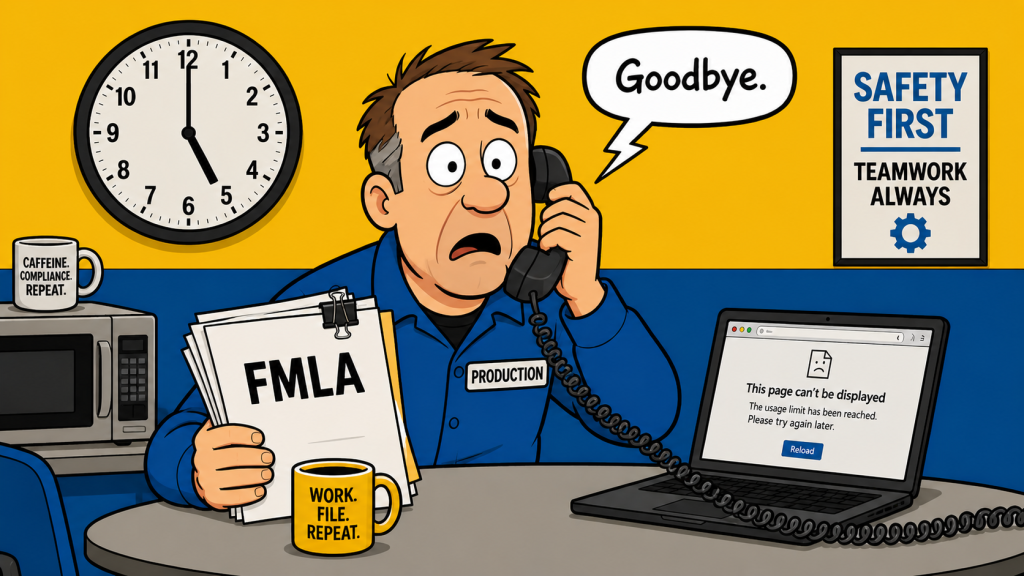
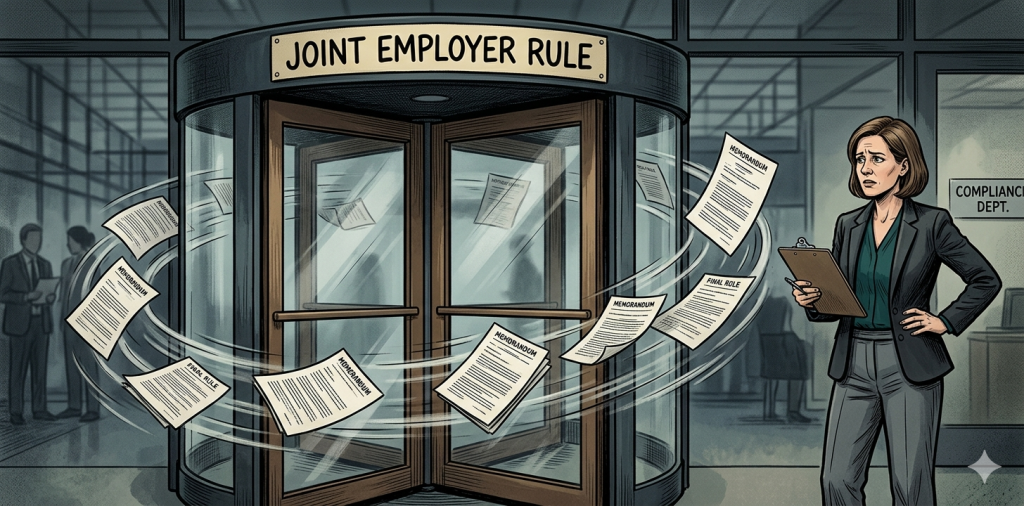
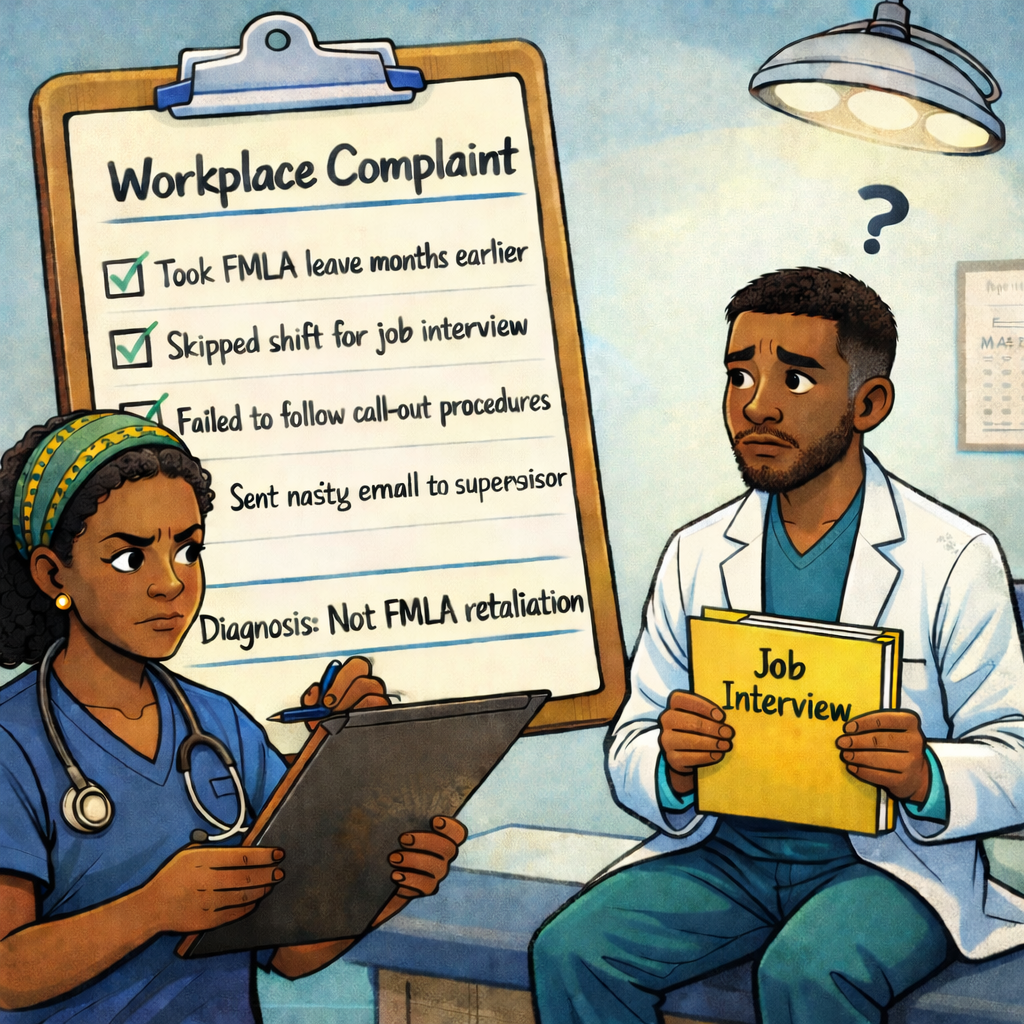
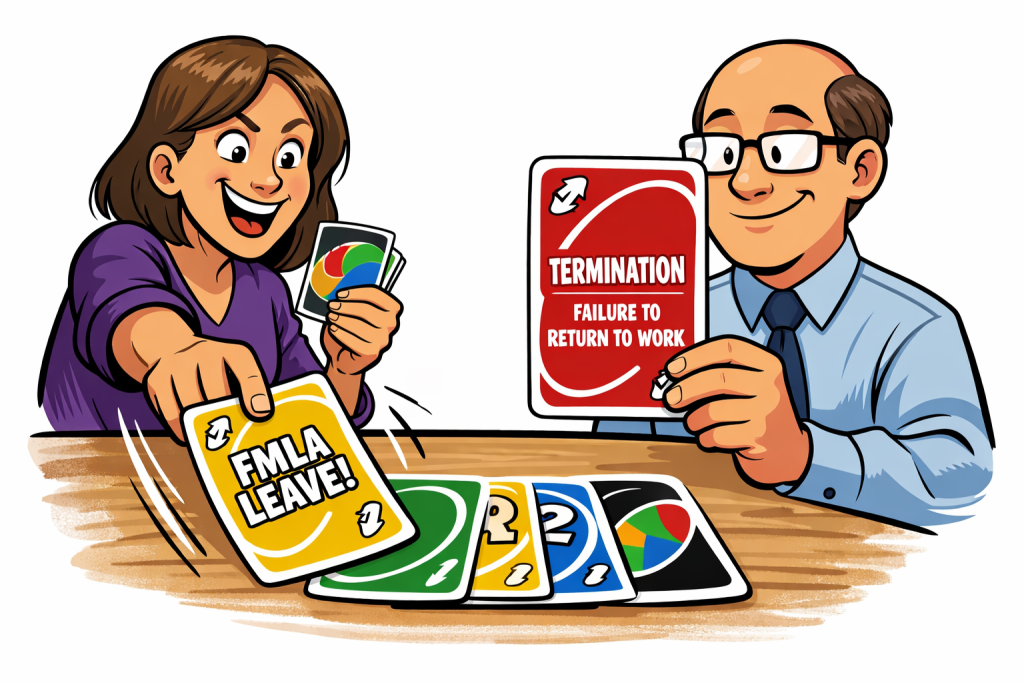
Cool image, huh? I drawed it myself. The fact that I took the time to do that suggests that I am in no condition to blog intelligently. Plus, Pandora is on the fritz, so I am all sorts of pissy. Therefore, before I turn out the lights and lock the door at the office, how about some Slipknot -- anger issues, Eric? -- and "That's what he said" after the jump...
Yesterday, the U.S. Supreme Court in Coleman v. Court of Appeals of Md. held that state employees have no cause of action under the self-care provision (last bullet point in the hyperlink) of the Family and Medical Leave Act. In plain English, if you work for a State employer, and you need time off work for a serious health condition that leaves you unable to perform the essential functions of your job, the FMLA does not require that your employer give you any time off.
Yesterday's SCOTUS opinion does not affect the FMLA rights of two classes of eligible employees:
Employees who work for private sector employers who employ 50 or more employees for at least 20 workweeks in the current or preceding calendar year - including joint employers and successors of covered employers.
Also, the Court reaffirmed that states (and the other employers listed above) may still face FMLA liability for violating the family-care provisions of the FMLA (first three bullets in the hyperlink). The Court also did not discuss the right to take leave under the Americans with Disabilities Act or various state leave laws.
The Family and Medical Leave Act allows an employer to require that a employee's request for FMLA leave be supported by a certification issued by the employee's health care provider. An example of one of the right ways to do this, from a recent federal-court decision, follows after the jump...
In this case of first impression in the Third Circuit Court of Appeals, which covers PA, NJ, DE, and USVI, the court ruled that a supervisor in a public agency may be subject to personal liability under the Family and Medical Leave Act. The court further emphasized that there is "no reason to distinguish between public agencies and private employers under the FMLA insofar as individual liability is concerned."
The United States Department of Labor announced here yesterday that it is issuing proposed rules that would expand military family leave provisions under the Family and Medical Leave Act and incorporate a special eligibility provision for airline flight crew employees.
Last month, the U.S. Department of Labor published new fact sheets on its website. Employers and employees alike will want to check these out:
Here is a link to the FLSA fact sheet. This fact sheet provides general information concerning the FLSA's prohibition of retaliating against any employee who has filed a complaint or cooperated in an investigation.
The FMLA fact sheet, a copy of which you can find here, provides general information concerning the Family and Medical Leave Act's (FMLA) prohibition of retaliating against an individual for exercising his or her rights or participating in matters protected under the FMLA.
That's right folks. It's time for another edition of "Fact or Fiction" a/k/a "Quick Answers to Quick Questions" a/k/a QATQQ f/k/a "I don't feel like writing a long blog post". So, let's get right to today's question:
That Eddie Employee is a gamer.
While filling up at the Gas-N-Gulp on his way to work, out of nowhere, a punk teen whacked Eddie across the face with a skateboard. Youch! Jaw broken, Eddie got back into his car, drove to work, and somehow managed to stumble into HR. Spitting out blood and teeth, Eddie asked Agatha Administrator for a week off from work to go to the hospital to have surgery to fix his ugly mug and recuperate. However, as Eddie slurred and lisped out his request, he never specifically mentioned the letters "F-M-L-A".
You betcha. According to this FMLA fact sheet, Eddie only needs to provide "sufficient information for the employer to understand that the employee needs leave for FMLA-qualifying reasons (the employee need not mention FMLA when requesting leave to meet this requirement, but may only explain why the leave is needed)."
Back in 2005, a Pennsylvania federal court recognized in this opinion that an employee's FMLA rights become sacrosanct upon requesting FMLA -- even if the employee is not yet FMLA-eligible -- provided that the employee has satisfied all FMLA service requirements when the FMLA begins. Where would this most likely arise? Why with pregnancy, of course. Something like:
Female employee starts work;
A few months later, she gets pregnant and requests FMLA to commence upon childbirth; and
She gets fired before giving birth.
Hey, those sound like the facts of Pereda v. Brookdale Senior Living Communities, Inc., a case decided in the Eleventh Circuit Court of Appeals last week. More on this case, together with a big helping of FMLA tips for employers, after the jump...
As the year draws to a close, let's take a look back at the most popular posts at The Employer Handbook in 2011, based on number of hits:
5. Social media and the workplace. School teacher Natalie Munroe made several appearances on the blog this year. Remember her? She was the blogging school teacher who wrote that her students were "utterly loathsome in all imaginable ways." Although, Ms. Munroe eventually returned to work, her experience is a sound reminder to always think twice before hitting "send." You can read the fifth-most-popular post, "Yes, you CAN discipline employees who abuse social media" here.
4. I'm a poet and I don't even know it. I'm not sure what inspired the fourth-most-popular post. It must have been a slow news day. How else do I come up with the idea to Haiku -- verbing a noun, sorry -- about recent employment-law decisions from the U.S. Supreme Court?
3. FMLA remains a hot issue.This one surprised me. The third-most-popular post is about FMLA legislation in Pennsylvania that never passed.
2. Short and sweet. The second-most-popular post was one of my shortest. I merely announced that the EEOC had finalized its ADAAA regulations. (Note to self: keep it short)
1. Yeah, I know, you only clicked "by accident." This was a runaway. Not even close. To put things in perspective, nearly 4% of all page views at The Employer Handbook were on this one story. Not to come off as too vain -- I'm sure I've done that already in my other stellar posts -- but nearly four times as many viewers checked out the number-one post than my blog biography. What else can I say? In the end, sex sells. (Note to self: keep it sexy).
Thank you to everyone who made The Employer Handbook such a success in its first year. We'll be back on January 3, 2012, the official one-year anniversary of the blog, with something short and sexy employment-law related. But possibly short and sexy.
A NJ court recently held that a business can force an employee to arbitrate FMLA claims -- even if the arbitration agreement that the employee signs does not contain a specific FMLA waiver.
How does this all work?
Well, according to the NJ Superior Court in Flores-Galan v. J.P. Morgan Chase & Co., N.A., "an agreement to arbitrate statutory anti-discrimination claims must be specific enough to put the employee on notice of the claims encompassed." However, "an arbitration clause need not specify every conceivable statute that it covers."
Ultimately, according to the court, an arbitration agreement that forces an employee to forgo litigation of certain employment claims must satisfy two criteria:
It should contain a waiver of rights provision that, at the very least, "provide[s] that the employee agrees to arbitrate all statutory claims arising out of the employment relationship or its termination.
The agreement should also reflect that the employee understands the type of claims included in the waiver, e.g., workplace discrimination claims.
Keep in mind that laws may vary from state to state. Best to contact an employment attorney before having an employee sign any arbitration agreement.
So, yeah, in cased you missed it, yesterday, was part one of a gripping two-part series about how employees who share XXX at work tend to get the short-end of the litigation stick should they later decide to sue their employers.
Today, we conclude this series -- thankfully -- with a look at a hospice nurse who felt it appropriate to share cell phone shots of her boyfriend's wee-wee with some of her patients. She then takes FMLA leave and, yeah, you can see where this is headed (after the jump...)
If you have 50 or more employees, you must abide by the Family and Medical Leave Act. The FMLA affords up to 12 workweeks of leave in a 12-month period, among other things, to care for a parent with a serious health condition. But let's say that you have dropped the ball and failed to provide your employees with:
information or notice explaining the provisions of the FMLA,
information regarding how to file complaints for violations of the FMLA, and
FMLA information in "any written guidance to employees concerning employee benefits or leave rights, such as in an employee handbook."
Let's even assume that one of your employees takes leave that would otherwise qualify under the FMLA, but you fail to tell that employee that the FMLA covers the leave.
Have you interfered with your employee's FMLA rights? I'll spin some Alice in Chains and drop the 411 after the jump...
The Family and Medical Leave Act affords eligible employees up to 12 weeks of unpaid leave during any 12-month period because of a serious health condition that makes the employee unable to perform his/her job.
Let's say that you have an employee who requests FMLA for a medical procedure that will keep him laid up for a while. But, you're suspicious. So, you hire a PI to follow the employee and record his every movement. You view the videotape and see that the employee is walking, driving, and even shopping. What the hell?!? Naturally, you think the employee is scamming the company so you fire him.
Legal? Or FMLA interference? Find out after the jump...
Last week, Rep. Lynn Woolsey (D-CA) reintroduced the Domestic Violence Leave Act, which expands paid leave options for victims of domestic abuse, sexual assault, or stalking. Details on the pending legislation and what it would mean for employers if it passes after the jump...